As a Joint Commission-accredited hospital serving hundreds of thousands of patients annually, this acute-care leader has over 450 beds and has been serving the Southeast for over 50 years.
Overview
Annual Cost Reduction
$30,000
Devices Lost in First 120 days
High-Value Devices Tracked
40
Challenges
Core Problem:
Without a defined process for storage or tracking, the anesthesia team was routinely losing video laryngoscopes – more than 50 in just two years. The losses totaled over $65,000, straining budgets and forcing unnecessary reorders for essential patient care tools.
Initial Struggle:
CRNAs frequently used the hospital’s video laryngoscopes throughout their shifts but often left them in various locations – or unintentionally took them home. Because the anesthesia team rotated across facilities, misplaced devices could go unaccounted for days or even weeks, leading to wasted time, frustrated searches, and repeated purchases of “lost” equipment.
Leadership grew concerned about the lack of a structured check-in or tracking system. According to a Nursing Times survey, U.S. nurses waste between 21 and 60 minutes per shift searching for misplaced tools – up to 40 hours a month.¹ For each nurse on the team, that lost time adds up.
The Solution
Smart Storage and Checkout System:
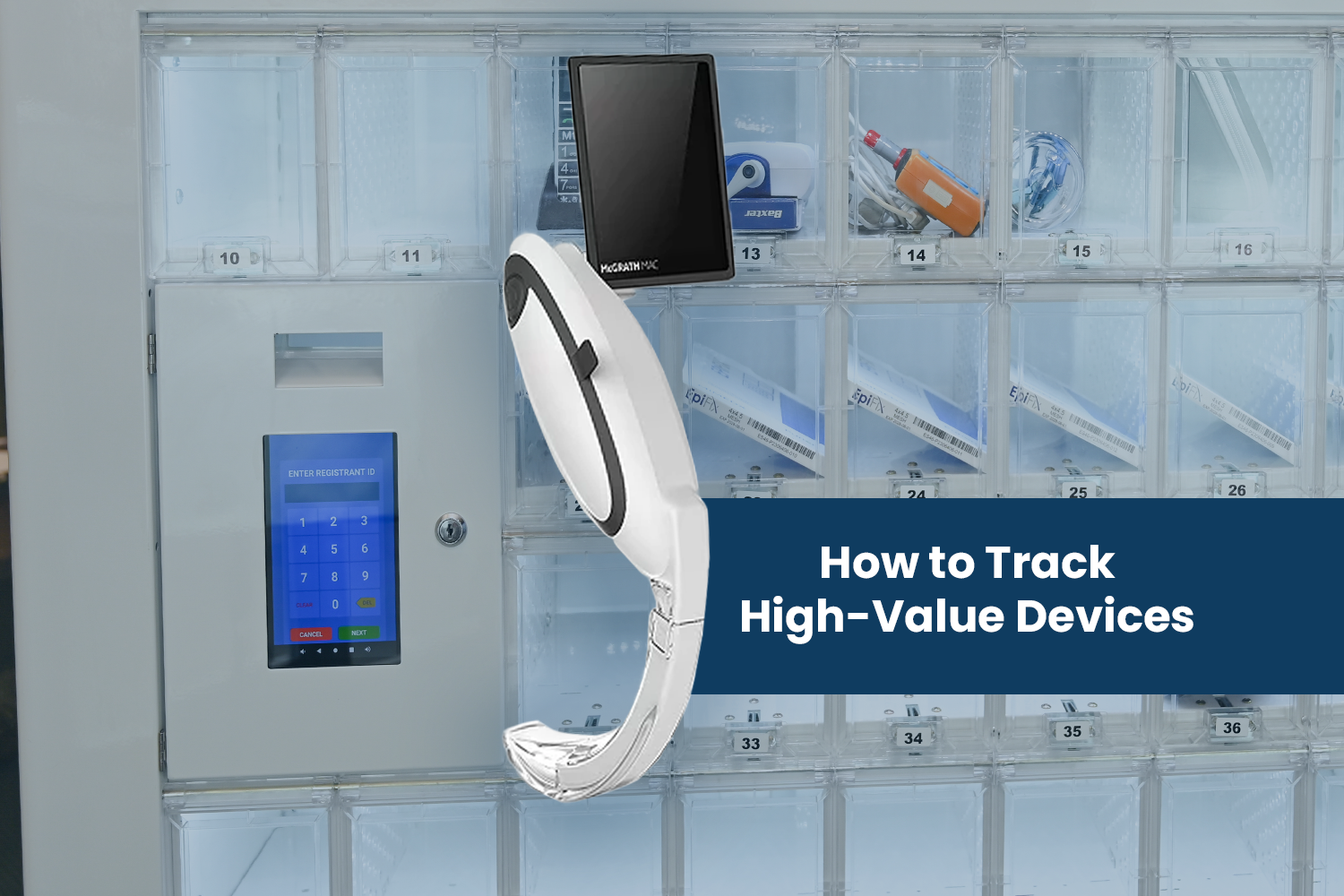
To address the recurring loss of video laryngoscopes, the facility deployed SurgiLocker – a secure, automated storage and tracking solution. The SurgiLocker team secured the 40 laryngoscope handles in individually assigned compartments, each linked to a unique storage cell number.
PIN-Based User Access and Workflow Integration:
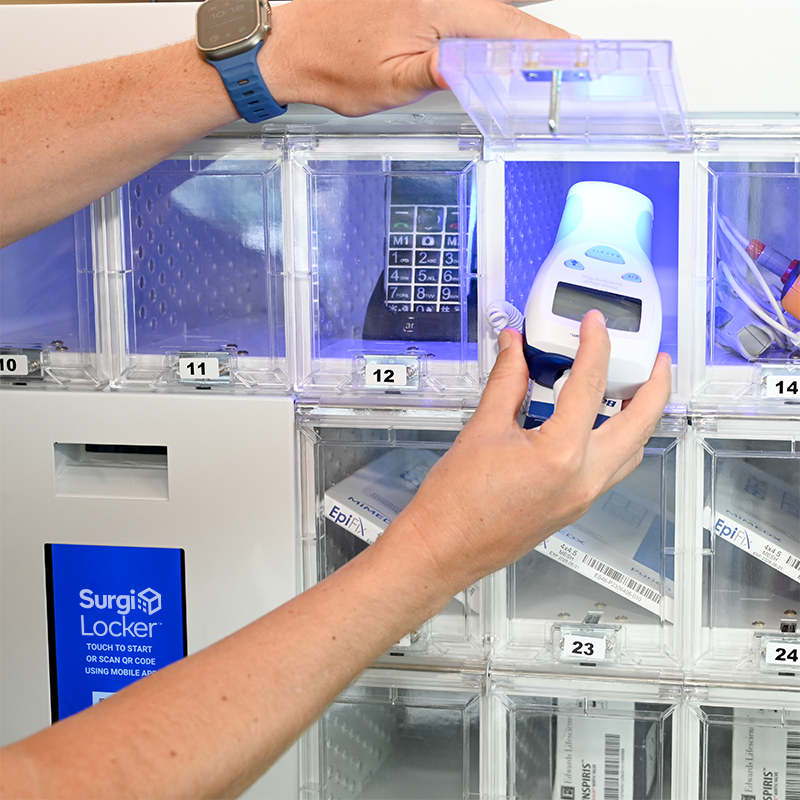
CRNAs access devices using their employee ID and personal PIN via the SurgiLocker touchscreen interface. This ensured that every device checkout was linked to a specific user, creating a seamless layer of accountability that matched the facility’s daily workflows.
Real-Time Alerts to Leadership:
Each time a device was checked out or returned, managers received instant text message alerts that included the user’s name and device number. This closed the loop on equipment tracking and gave leadership the ability to intervene quickly if a device wasn’t returned as expected
“SurgiLocker is doing exactly what we needed it to do.”
CRNA, Anesthesia Leader at this facility
The Impact
Zero Losses: In the first 120 days of implementation, the hospital experienced zero laryngoscope losses – an immediate halt to a problem that had previously cost tens of thousands annually.
Increased Accountability: Managers now receive real-time alerts for device access and returns, allowing rapid follow-up and eliminating device loss due to delayed returns or unclear responsibility.
Improved Workflow:
CRNAs reported a smoother process with clearly assigned equipment, reducing confusion and saving time during high-pressure procedures.
Annual Savings: With zero laryngoscope losses in the first 120 days, the hospital is now on track to save over $30,000 annually in avoidable replacement costs
Get this PDF sent to your inbox:
Get this and our other case studies as PDFs sent to your inbox: